
Eighty-seventh Issue! Blood Moth
Welcome to March, a month of unsettled skies and restless air. Winter loosens its grip, but spring has not quite taken hold. The wind turns unpredictable. The ground softens. Something stirs beneath the thaw. There is a rawness to March, a sense of emergence, as if the world is shedding one skin before it is ready to reveal the next.
Welcome to the eighty-seventh edition of the Flame Tree Fiction Newsletter.
This month’s theme is Blood Moth. These are stories of transformation and hunger, of wings drawn to warmth and bodies drawn to darker callings. Expect ritual and metamorphosis, devotion and dread, moments where beauty and horror cling to each other like blood on silk.
Thank you to everyone who submitted this month. Your stories fluttered in the dark and left their mark. Are you ready to step into the swarm?
Congratulations to both winners of the March theme: Georgina Kamsika and Jennifer Crow!
Consecration by Georgina Kamsika – A young woman enters a sacred rite that binds blood, faith, and power — only to discover the cost of devotion is far stranger than she imagined...
Fragile Wings Dipped in Blood by Jennifer Crow – An obsessed artist uses blood and moths to summon beauty from the dark, unaware that something may be summoning him in return...
This month's newsletter features:
- NEW Romantic Fantasy and Flame Tree Collector's Editions titles!
- Myth & Fiction Podcast
- Original Horror Flash Fiction #1: Consecration by Georgina Kamsika
- Original Horror Flash Fiction #2: Fragile Wings Dipped in Blood by Jennifer Crow
- EXCLUSIVE Newsletter Subscribers Special Promotion
- Next Month’s Flash Fiction Theme
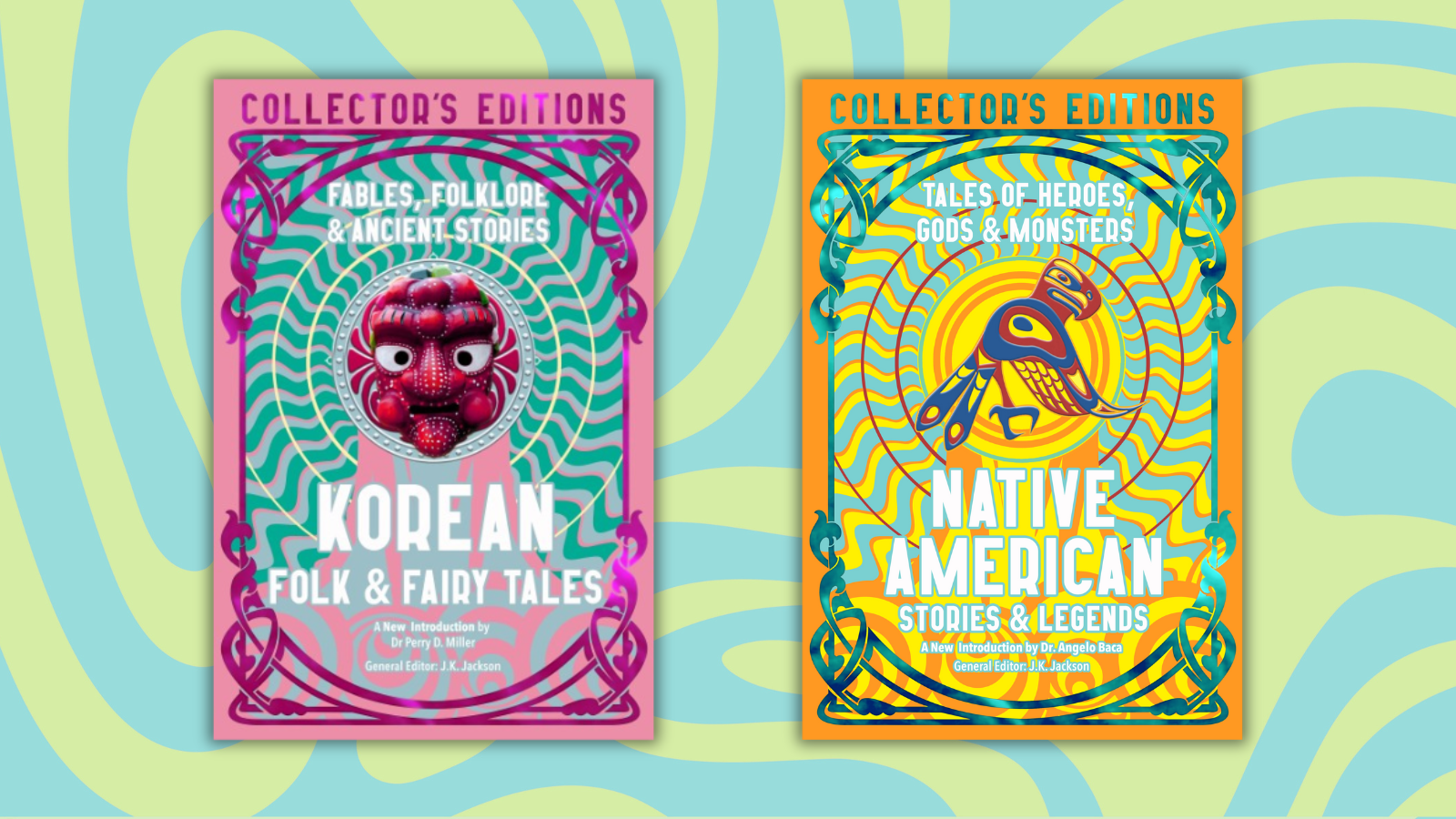
I Ching
I Ching, also known as Yî Ching or The Book of Changes, is an ancient Chinese text of vast cultural influence, spanning divination, cosmology, morality and philosophy. With ties to Confucianism, it offers an early attempt to understand the world and humanity's place in it. This compact edition revives James Legge’s classic translation.
The Art of War
New, stunning compact edition. The Art of War has been a source of great inspiration throughout the ages. Focusing on military strategy, psychology and tactics, each section concentrates on a different facet of warfare, such as communication, strength and positioning. Its enduring wisdom has had a far-reaching impact all over the world.
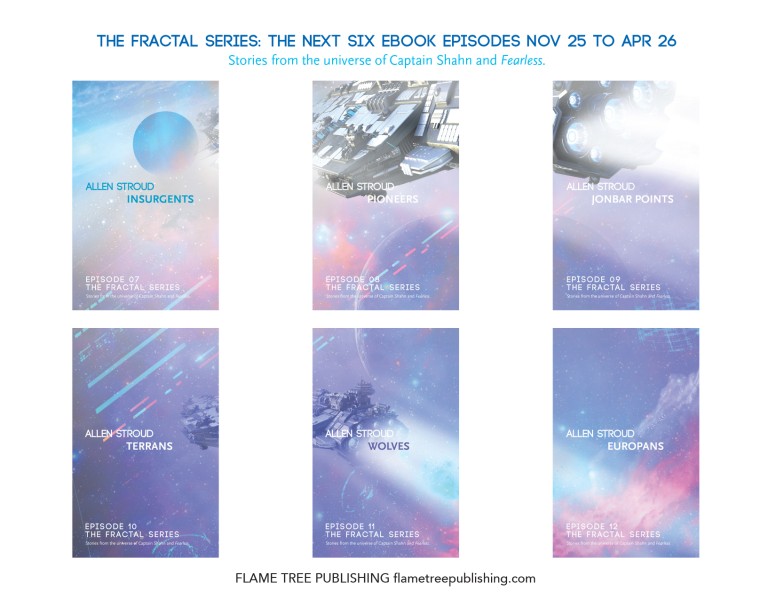
Wolves
Eighteen months after returning to earth, Bill Travers finds himself in the centre of an international terrorist incident. Satellites are being destroyed by an aircraft that appears to defy the laws of physics. Can he uncover who is behind this? Major Angel Le Garre is sent to steal the aircraft. But when the mission goes wrong, will she be able to outwit her enemies and complete her objective? Number eleven in The Fractal Series Episodes.
Original Horror Story #1
Consecration
Georgina Kamsika
In the silence of the Sacrificial Atrium, where the only sounds are the drip of faith and the flutter of crimson wings, my ceremony goes quietly, terribly, wrong.
The air is cool, smelling of stone and incense and the faint, metallic tang of blood. I kneel on the polished obsidian disc, the chill seeping through the thin linen of my robe. Before me, looming beyond the arched window, is the god. Unlike the gods of nearby heathen villages, this god is not a statue but a vast, fibrous cocoon the colour of a storm cloud, hanging above the silent abyss of the sacred chasm. It has been there for twelve generations. It is why my city clings to the canyon’s rim.
High Priest Durai’s voice is a dry riverbed of sound, reciting the Litany of Approach. My own blood is a quick, hot rhythm in my ears, drowning out his words. I have been chosen. It is the highest honour. My blood will be the ink of a prayer, my life the postage for a message they have been sending for centuries. Better to die now, connecting to the god, than starve in the gutters, poor and alone.
The silver knife is cold, then briefly fire, as Durai draws the ritual cut along my left forearm. Deep and precise. A line of perfect, welling red that flows towards the cocoon. The prayer begins.
From the shadowed niche above the window, it comes. The blood moth. Its wings are the colour of wine dregs in the sacred cup, a shocking, living crimson against the grey stone and the greater grey of the god. It is two-hands-spread wide, its body velvet-black. It descends on wings that make no sound, a piece of the night given purpose.
It alights on my arm, its legs delicate as ash. I feel the minute prick of its proboscis, a sensation like a single needle of ice. This is the moment of communion. It will drink, its body will glow with a transient, divine light, and then it will fly to the god’s cocoon, dissolving against its surface, delivering my essence, my plea, my sacrifice.
I hold my breath. I offer up my fear of death, my pride in dying for my god, and my fleeting memories of last night with the moon lighting the market streets: a final, mental bouquet.
The moth drinks. I feel a pleasant dizziness. The priests hum a low note. The moth’s wings shimmer, pulsing once with a soft, internal carmine light.
‘Now fly,’ I think.
It does not fly. My blood flow slows, then stops. It retracts its proboscis, delicate as a lady sheathing a pin. It sits, sated, its wings folding gently into a steep, dark roof. Then, with a flutter that seems almost casual, it leaves my arm and lands on my shoulder. It nestles in the hollow between my neck and the linen and becomes still.
The humming stops. The silence is a physical weight. I dare not move. Durai stands frozen on the stone. There is a ragged, shocked intake of breath from the attendant acolytes.
The heavens have rejected me. I am an unaccepted sacrifice. Too poor. Too sick. Too corrupt for my god. This is not in the liturgy. There is no precedent. A sacrifice is always taken. This is a new terrible, ambiguous thing. The moth has taken the offering but refused the delivery.
“Heretic,” someone whispers. “Infidel,” says another.
Durai’s eyes are wide with a fury born of terror. The system is broken, the ritual polluted. I am a flaw in the sacred machinery.
“She is an abomination. She has corrupted the moth,” he hisses.
I’m not taken to the Hall of the Blessed where sacrifices are honoured posthumously but led to a cell in the under-chapel. The moth remains on my shoulder. They do not touch it or me. I am excommunicated with a speed that is itself a kind of panic. The great cedar door of the temple seals behind me with a final sigh. I sit by a mean little candle. The mark on my arm is a scabbing line. The weight on my shoulder is a sentence.
The moth unfolds its wings, not to fly, but to catch the light. And then, a voice, not in my ears, but in the marrow of my mind, brushes a wing against my thoughts:
…alone…so long…dark…
I start, my heart hammering. The creature’s antennae quiver.
…you dreamt of moonlight… stars…
It speaks to me with the voice of my own stolen memories, my own sacrificed thoughts, woven into something else.
…I dream… dreams of flight… of breaking…of ending…
The images come then, not my own. A sense of immense pressure, of a form folded in on itself for an aeon. A longing not for blood or tribute, but for rupture. The cocoon is not a shrine; it is a prison. And it is not dormant. It is straining.
The blood moths are not messengers carrying prayers to the god. They are sampling the dream-stuff of mortals, the complexity of conscious life—the fear, the love, the memories—and weaving it into a psychic solvent. For centuries, we had been feeding the god. Not to sustain it, but to give it the template to finish its metamorphosis.
My moth has not rejected its duty. It has completed a deeper one. It has found in me not a sacrifice, but a partner. The god has chosen to stay, to link, to show me.
…I wish to wake… I will break the chrysalis… the priests… the city… everything…
I look from the moth to the cell wall, as if I can see through it to the colossal, straining form. The moth on my shoulder is a key.
And the lock is turning.
“Then wake,” I whisper, offering the remaining dregs of my spirit as a final sacrifice to our god.
Georgina Kamsika is a speculative fiction writer born in Yorkshire, England, to Anglo-Indian immigrant parents. She graduated from Clarion West in 2012, and was the UNESCO Cities of Literature Writer for Wonju in 2022.
This story centres gods, oppression, and rebellion, topics that Georgina enjoys exploring in her fiction. Her next story is ‘The Stars Keep Their Promise’ at The Orange & Bee, and she is writing an interactive fiction game for Choice of Games. She can be found at www.kamsika.com and @GKamsika on most socials.
Original Horror Story #2
Fragile Wings Dipped in Blood
Jennifer Crow
In the artist’s studio, where evening’s gloaming settles deeper shadows in the corners of the room, Loren the painter lays out a saucer full of sugar water, dyed red. Beside it, the flame of a candle rises and falls with each gust of wind that seeps through cracks and slithers into the room. Moths rise and fall as well, their pallid wings fluttering into and out of the circle of light.
From time to time, one dips into the saucer of red water, tasting with its uncoiled proboscis. It tries to take off again, sags, and lands on a piece of thick paper pinned on the table with four smooth black stones. Its wings mark the white surface. A cypher, an untranslatable alphabet, the spatters begin as a few isolated spots. Gradually, though, more moths flock to the saucer, dip, and conjure tiny, spreading circles. More marks appear on the paper. Some are sharp and defined, while others blur and fade. Every so often, a moth lands and cannot take off again, its wings fouled.
To the artist, those dying insects seem like smaller and more delicate pieces of paper. Ash, perhaps, burnt to white. The remnants of secrets never to be revealed, he can banish them with a breath or two. And so, he does.
He means for this sheet of paper to become the basis of a new spell, a conjuration. Loren dreams nightly of a woman, pale and delicate, cast in shadow. In the dream, moths circle her like the tattered edges of a shroud. It may be that he has fallen in love or perhaps into bewitchment. Either way, he will have her.
Moon and stars wink at him through the narrow gap in the curtains. Then they continue on their journey, leaving him with only a guttering stump of candle to illuminate his studio. As dawn creeps in, its wan light drowns out the flickering flame, so he licks his thumb and forefinger and quenches the fire. He and the moths go to sleep as the world comes to life around them.
He sleeps through the shouts of street vendors, the quarrels which erupt in the tavern across the road, and the clangor of alarm bells as some greater tragedy arrives in the city. When at last he stirs, he makes a meal of stale bread and warm beer. The meal leaves his belly full and his heart empty.
Before his eyes, as the dagger of light grows brighter, the marks of his moth-art fade. Though they do not disappear entirely, whatever meaning he hoped to glean from the faint brushstrokes of their wings becomes nothing more than a series of smudges. Annoyed, he crumples the paper and casts it aside. His work, he now sees, requires something more substantive than mere plant dyes. He turns his hand over, studies the bluish lines which run from his elbow to his wrist, and sees the answer to his dilemma.
Night returns, and from his dwindling supply of candles, he lights another. The moths gather, ashen gray and stippled with red, as if they carry marks from the previous night’s labors. This time, the dish he sets out contains not dye but blood, drawn from his wrist and dripped into sugar water. He worries the change in flavor might drive away his collaborators. But as he waits and watches, they begin their dance again. Dip, splash, struggle. Flutter away or surrender to gravity and the weight of his blood.
The moths fill the first sheet of paper. He sweeps it aside and lays out another for them, and a third. Sleepless, he strains his eyes in the dim light. Have they left another message for him? Will he be able to read it in the morning?
When at last the candle gutters, and only a few moths remain in the air around it, he snuffs out the light and retreats to his narrow cot. Neither the bed’s groans nor the cacophony of morning in the city can keep him awake. He sleeps and dreams of a woman wrapped in wind-blown scarves made from thousands of moth wings, their silken ends brushing his skin in gentle temptation.
He wakes smiling, the memory of her beauty lingering. But when he tries to roll off the cot, all his mind turned to the moth’s painting, and what it might have summoned, he finds himself unable to move. With great effort, he wrenches his chin to his left. As he does, silken strands brush his cheek and sag into his eyes. Casting his gaze down, he sees his body wrapped in a cocoon like the one from which the moths emerge, but larger.
Loren struggles to clear his vision. Someone stands in the center of the studio, slender and pale. He smiles—he thinks he’s smiled—but something covers his mouth. The figure leans closer, brushes a cool hand across his brow and his lips. It is the woman from his dream, and she meets his gaze with eyes the color of storm clouds.
As he struggles to speak, she holds up the papers from the previous night, with their moth-made spell. A few wings dot the page, his blood glueing them in place. When the woman smiles at him, he thinks she must be grateful he freed her. But as her lips part, a tube unrolls. She has a proboscis as well, barbed at the end, and as Loren screams, it pierces the vein in his throat. Moths flutter over him, first a few and then untold numbers of them. A cloud, he thinks. A cloud of wings catches the light, and for a moment, he thinks he can see each individual scale on them. Not gray, but iridescent and refracting the light into a sheen so beautiful it breaks his heart.
Shy and nocturnal, Jennifer Crow has rarely been photographed in the wild, but it's rumored she lives near a waterfall in western New York. In the past quarter-century, her work has appeared in many venues, including Uncanny, Analog, and anthologies like Along Harrowed Trails and Under Her Skin. A Rhysling Award winner in 2023 for her poem “Harold and the Blood-Red Crayon,” she will have work in upcoming issues of Asimov’s Science Fiction and Penumbric. Those who’d like to know more about her writing can catch up with her on Bluesky: @writerjencrow.bsky.social.
Next Month’s Newsletter FANTASY Theme:
Our next edition of the newsletter will be FANTASY themed, and we are looking for stories around the theme of:
Forbidden Flame
Please note that all stories submitted should be within the FANTASY genre.
Terms and conditions for the submissions here: https://flametr.com/submissions.
Please send your 1,000-word story to the Newsletter Editor:
Leah Ratcliffe
flashfic@flametreepublishing.com
The deadline is 15th March 2026.
We look forward to reading your submissions. Happy writing!
 Sign up for our fiction newsletter