
Eighty-ninth Issue! Gravity Thieves
Welcome to May, a month where the world feels lighter on its feet. Days stretch longer, the air hums with movement, and everything seems to drift just slightly out of place. There is a sense of lift in the season, as if the rules that hold things down are beginning to loosen.
Welcome to the eighty-ninth edition of the Flame Tree Fiction Newsletter.
This month’s theme is Gravity Thieves. These are stories of stolen weight and broken pull, of forces disrupted and worlds set adrift. Expect slipping orbits, bodies that refuse to stay grounded, and moments where control falters and the impossible takes hold.
Thank you to everyone who submitted this month. Your stories bent the rules and let the impossible rise. Are you ready to lose your footing?
Congratulations to both winners of the May theme: Emmanuel Blavo and John McLaughlin!
The Weight of Memory by Emmanuel Blavo – A lone thief steals a powerful gravity core in a fractured future, driven by a need to reclaim something humanity lost when the Earth itself was made lighter...
Reverse Engineering by John McLaughlin – A routine gravity-heist near a black hole spirals into a tense, reality-bending crisis when something impossible boards the ship...
This month's newsletter features:
- NEW Romantic Fantasy and Gothic Fantasy titles!
- The Complete Fractal Series Episodes
- Original Sci-Fi Flash Fiction #1: The Weight of Memory by Emmanuel Blavo
- Original Sci-Fi Flash Fiction #2: Reverse Engineering by John McLaughlin
- EXCLUSIVE Newsletter Subscribers Special Promotion
- Next Month’s Flash Fiction Theme
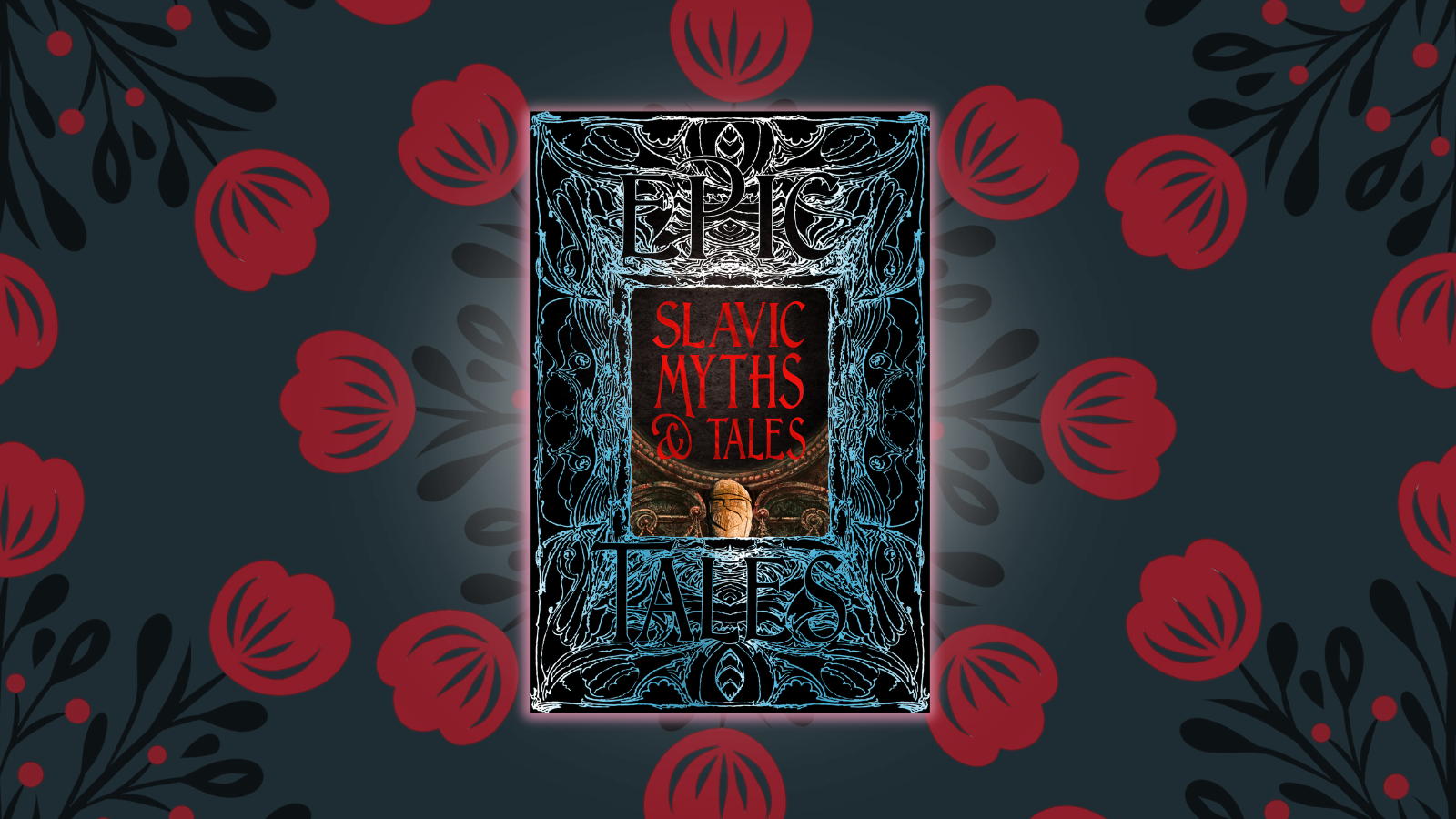
Slavic Myths & Tales
This collection of Slavic tales draws on Eastern Europe’s oral storytelling traditions, shaped by ancient folklore and early Viking influence. It features magical landscapes and classic stories like The Frog Princess and The Feather of Bright Finist the Falcon. It also includes an exploration of vampire lore in the Slavic world.
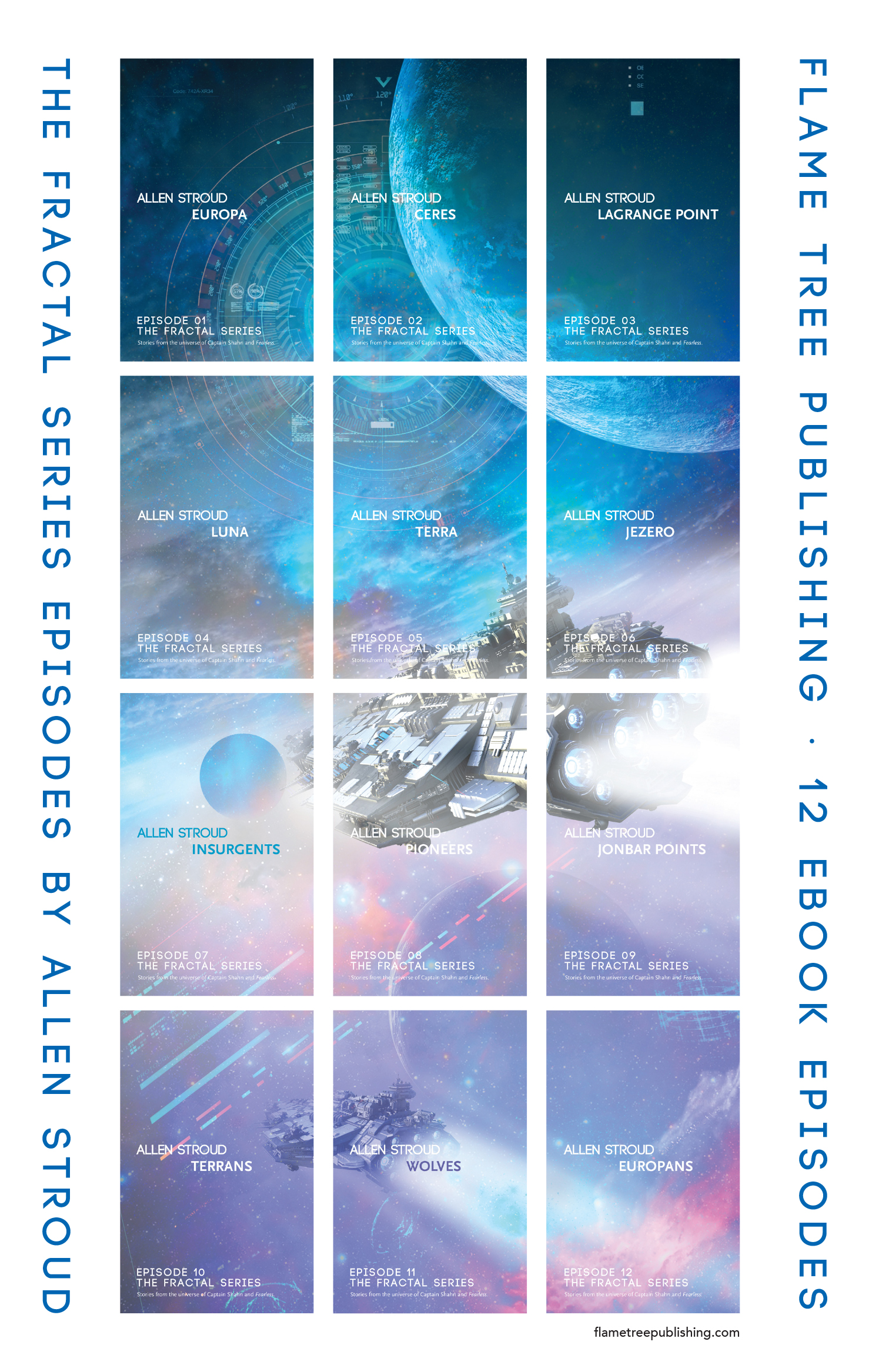
The Fractal Series
All twelve episodes of The Fractal Series by Allen Stroud are now available, bringing this ambitious sci-fi saga to its full conclusion. Set in a fractured future shaped by advanced AI, interstellar conflict, and shifting human identity, the series blends high-concept science fiction with fast-paced storytelling and rich worldbuilding. If you’ve been waiting to dive in—or to finally see how it all ends—now’s the time to experience the complete journey.
Original Sci-Fi Story #1
The Weight of Memory
Emmanuel Blavo
Mira's job was to steal the invisible.
She stood on the crust of a dead moon, adjusting the calibrator on her wrist. Below her boots, a colony of belt miners breathed recycled air and dreamt of Earth's pull—the soft, certain drag that told you where down was. Out here, bones went light. Muscles melted. The soul drifted.
A small wooden pendant hung beneath her suit—a bird facing backward, its beak touching its tail. Her mother had given it to her before the Siphon. "It means something," she had said. Mira had forgotten what that was. Only the shape remained.
Her target: A Class-7 Gravity Well, buried beneath the colony's fusion core. Some forgotten corporation had bottled a fragment of a neutron star's mass into a crystalline lattice the size of a child's fist. Encased in a vibrating null-field housing to keep it from crushing the moon’s crust, it was the only reason the colony stayed in a stable orbit. It was also worth fifty years of wages.
Mira didn't care about money. She cared about the hollow feeling in her chest, the one that started the day Earth's own gravity was stolen.
The Great Siphon, they called it. Twenty years ago, someone cracked the planet's core and bled a fraction of its mass into portable singularities. The result: tides shrank by a third. The atmosphere didn't vanish, but it thinned; the planet could no longer hold the pressure needed for effortless breaths. People woke up lighter, but wrong and disoriented. Like a song missing a note.
The thieves called it liberation. Of course, they would.
She sliced the colony's outer lock in eleven seconds. Inside, the corridors smelt of recycled sweat and desperation. She moved like a ghost through 0.3 g, each step too floaty, each corner too sharp. The miners were asleep, their bodies strapped to bunks so they wouldn't drift into ceilings.
The vault had three locks. Mira had nine ways to break each one. She pulled the lattice, housing and all, from its cradle. Even with the null-field humming at maximum capacity, it was heavy. Good heavy. She could feel the "leakage" of the mass tugging at her marrow, reminding her what real weight felt like.
That's when the lights died. A single screen flickered on, casting a sickly blue light over the vault.
"The lattice is calibrated for the colony's orbit, Mira. You pull it, and this rock becomes a derelict in six hours."
Mira didn’t turn. She kept her hands on the warm, pulsing housing. "I’m not here to negotiate the bill, Del. I know you run this rock."
"Then you know the Board charges us by the milligram to keep our blood from pooling in our heads," Del said, stepping from the dark. Her coveralls were stained with lunar dust. "You aren't the first thief to eye the core. Most want to sell it to Mars for a fast ship and a life of drifting."
"I’m not selling it for credits," Mira snapped. "And I'm tired of drifting."
Del leaned against a bulkhead, her eyes tracking the crystal. "Earth’s air is too thin to catch, girl. Taking that mass back won't fix the lungs of a billion people overnight."
"It’s not just about the air," Mira whispered, her thumb tracing the backward-facing bird on her pendant. "It’s about the soul. We’ve been living light for too long. We’ve forgotten how to stay down."
Del was silent for a breath. She looked at her own hands—thin, translucent skin over brittle bone. "We’re already ghosts, Mira. If you’re going back to fetch what we left behind... then you’ll need a crew that knows how to patch a hull when the pressure gets real."
Mira finally looked up. "You’d let the colony lose its anchor?"
"This colony is a cage with a high-gravity entrance fee," Del said. "I’d rather fall with you than float here until I’m dust."
They left the vault humming. Behind them, the colony's gravity flickered—just for an instant—as the orbital stabilizers failed. In the bunks, everyone dreamed of falling.
Sankofa.
The name surfaced as Mira watched Del secure the housing into the ship's core. As Del worked, the sparks from her arc welder didn't fly straight; they curved in mid-air, sucked into the micro-orbit of the lattice.
When the connections fused, the ship didn't just power up; it groaned. The deck plates, usually silent and rattling, suddenly pressed upward against their boots. It was a violent, beautiful reclamation. Mira felt her spine compress, her lungs working harder to pull the thinning oxygen. It was the best pain she’d ever felt.
Mira ran her thumb over the pendant—the bird that knew you couldn't move forward without fetching what you had left behind.
"Where are we heading?" Del asked, wiping grease from her forehead as she stood—visibly heavier—on the vibrating floor.
Mira looked at the ship's hull. It held a crew, a gravity well, and the weight of a planet's hope.
"Back to fetch what we left," Mira said. "The Sankofa is going home."
For the first time, Mira didn't run from the weight. She carried it.
Emmanuel Blavo is a Ghanaian writer based in Accra whose work blends Africanfuturist ideas with the rhythms of oral storytelling. A former volunteer with CorpsAfrica/Ghana (2024–2025), his writing is deeply informed by the quiet strangeness of ordinary life and the ways the past lingers in the present. His fiction has appeared in Flame Tree Publishing’s Myths, Gods and Immortals anthology, and he cites the stylings of Stephen King and Terry Pratchett as his primary influences. Twitter: @elblavo | Instagram: @big_blavo
Original Sci-Fi Story #2
Reverse Engineering
John McLaughlin
The singularity hung in the viewport, a stark absence in a sea of stars. Simon had watched it grow slowly over the past week, their ship approaching the remote research station via a careful sequence of stealth vectors, flitting closer on short bursts of their engine, hiding in the radar shadows of asteroids. And now he and Klim and Nova could nearly reach out and slap the orange smear of the singularity’s accretion disc.
"A beauty", Klim declared, tapping the silver machinery that colonized half of his skull. “Class D microsingularity. Should be an impressive score.” With his array of bioprosthetics, Klim could taste radiation and hear microwaves and savour a burst of infrared the way an art connoisseur might admire a Rembrandt; his sensory field extended for thousands of kilometers beyond the ship. Simon had never worked with a synesthete before.
“Any worries about security?” Simon asked, turning to Nova now.
“For an underfunded research operation like this?” The captain smirked. “Security is nil. Should be a simple smash and grab.”
“We just need a little taste,” Klim cooed, and Simon could swear the man licked his desiccated lips. “We’ll be halfway back to Luna before they notice the missing mass.”
So they parked the ship and prepared to mine the black hole.
Simon had served on many gravity pirate crews in his day--earning a reputation for rigor--so he ran through his trusted checklist. He inspected the singularity bait, eyeing each nut and bolt of the electron trap that would speed the black hole’s decay. He ran diagnostics on the Hawking shroud, the kilometers of nano-weave that would unfurl like a vast spiderweb, draining the black hole’s gravity field and leeching its radiation to charge their onboard battery.
When the equipment was tested to Simon’s satisfaction, he reassembled the crew in the command module. “Here’s the plan,” he began, “we’re going to--”
“Wait.” Klim stood frozen, his antennaed head tilted toward the ceiling. “I hear something.” He tapped open a window on the main display. Sure enough, a lone figure floated: a spacesuited scarecrow suspended in the void, a few hundred klicks off the stern of their ship.
“What the hell...” Nova mumbled.
“He’s transmitting an emergency beacon.” Klim’s mechanical eye irised wider, gazing beyond the skin of the ship, skipping signals to his occipital lobe. He frowned. “It’s our frequency signature.”
“That’s impossible,” Simon said. “I encrypted--”
“He says he’s...you.” Klim turned his organic eye on Simon. “He’s transmitting your one-time identity pad.”
***
“There’s an accident. The singularity goes critical. I was--I mean, I will be--the only survivor.” The man--or more precisely, the man they called Simon Two, the man who had been hauled unconscious through the airlock, a spitting image of Simon--sat on a plastic stool, slumped against the wall of the galley, in the same drab shirt and trousers. Simon had folded away in his bunk a week ago.
Nova barked a laugh. “Time travel. Is this a joke?” She spun on Simon now, her cheeks flaring red. “You’re hustling us, right? Got a twin on Mars you never told us about? Cause I know you can’t afford one of those vat-grown clones.”
Simon tossed up his hands like a shield. “Look, I’m just as confused as you.” Threw a sidelong glance at Klim: “What about his biosignatures?”
“Your DNA is a match. I ran samples during decontamination.” A buzz and a click. “Same infrared profiles, too.”
Simon straddled the stool opposite his doppelganger, preparing for the bizarre experience of interrogating himself. “Tell us what happened, exactly. Details.”
Two took a swig of water. “You get greedy,” he said, “push the singularity too hard, frack it beyond its limit.” He steadied his trembling hand against the bulkhead. “Gravity field goes haywire. It’s dumb luck that I even survived--I was suited up outside the ship, patching a tear in the Hawking shroud tether. Last thing I remember is being ripped loose.”
“And you’re…what? An emission from the singularity?”
“Speaking plainly: I’m an unpaid loan.” Two gave a manic laugh. “Conservation of energy, remember? For every particle drawn into the singularity, an antiparticle is ejected--it’s what produces our harvest of radiation. But now there are two of us.”
Simon stared, his gut dropping into freefall. “Which means…”
The black hole was a greedy bastard. It demanded its gravity debt paid back and its stolen Simon returned to the void. Either one would do.
Nova’s hand drifted to her holstered stun gun. “Care to explain what’s going on here?”
The ship lurched, and a warning siren wailed, just as Two sprung himself off the galley wall. He yanked Simon into a headlock and slipped a utility knife from his inside pocket. “I’m not going back,” he shrieked through clenched teeth; he ratcheted his vice grip around Simon’s neck, eyes wild. “I saw…horrors…in there. Things that would splinter your mind.”
“Take it easy.” Nova leveled her stun gun, its grip trembling, its laser sight painting the evil twin who was also her crewmate. “We’ll figure this out.”
The ship groaned again, a deep vibration passing through its spine.
“Radiation levels are spiking,” Klim shouted. “The singularity is approaching criticality!”
Two sidled along the galley’s perimeter, step by careful step, his hostage held against a knife’s edge. Moving towards the emergency lifeboat.
“What’re you going to do?” Simon croaked against Two’s tensed forearm. “Toss me in like a human sacrifice?”
“Don’t do it,” Nova commanded Two. “I swear--”
Two tapped a sequence into the lifeboat’s control panel, resetting its flight path toward the maw of the singularity. Opened its door--
Just as Simon heaved himself sideways, throwing them both into its cramped interior. The door slammed shut upon detecting a pressure spike, and the lifeboat tore free on a jet of flame.
***
The crew stood, arms folded, eager to resume their job; time was short, but one of them had been spooked by something.
“I hear two unknowns.” Klim frowned, turning from the viewport toward Simon. “They’re both transmitting your one-time identity pad.”
John McLaughlin lives in Philadelphia, PA with his wife, daughter, and two cats. He is fascinated by the intersections of philosophy, technology and culture, and his short fiction has appeared or is forthcoming in Nature, Sci Phi Journal, and Bullet Points. His favorite contemporary writers in science fiction include Emily St. John Mandel, Peter Watts, and Rich Larson. You can follow him on Instagram: @jmclaughlinwrites
Our next edition of the newsletter will be HORROR themed, and we are looking for stories around the theme of:
Bone Orchard
Please note that all stories submitted should be within the HORROR genre.
Terms and conditions for the submissions here: https://flametr.com/submissions.
Please send your 1,000-word story to the Newsletter Editor:
Leah Ratcliffe
flashfic@flametreepublishing.com
The deadline is 17th May 2026.
We look forward to reading your submissions. Happy writing!
 Sign up for our fiction newsletter